
1956 St David's Marist Inanda Yearbook
- ZA ZAR STDS 2021001-003-03-2021001-003-03
- Parte
- 1956
Parte de St David's Marist Inanda Yearbooks


1956 St David's Marist Inanda Yearbook
Parte de St David's Marist Inanda Yearbooks
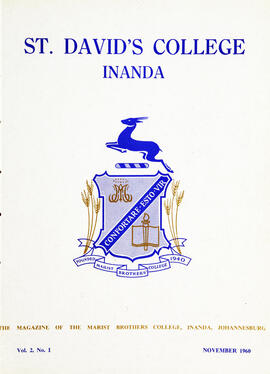
St David's Marist Inanda Yearbook 1960
Parte de St David's Marist Inanda Yearbooks
Record of the school's activities 1960
St David's Marist Inanda
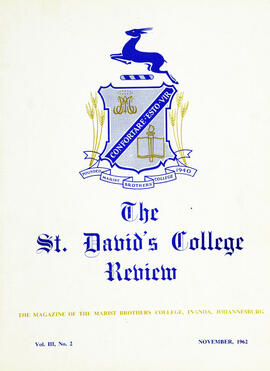
St David's Marist Inanda Yearbook 1962
Parte de St David's Marist Inanda Yearbooks
Record of the school's activities 1962
St David's Marist Inanda
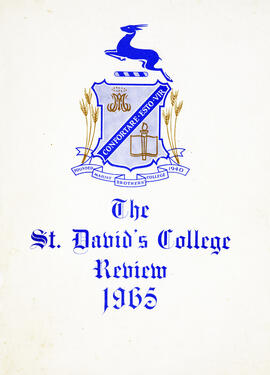
St David's Marist Inanda Yearbook 1965
Parte de St David's Marist Inanda Yearbooks
Record of the school's activities 1965
St David's Marist Inanda
St David's Marist Inanda Yearbook 1968
Parte de St David's Marist Inanda Yearbooks
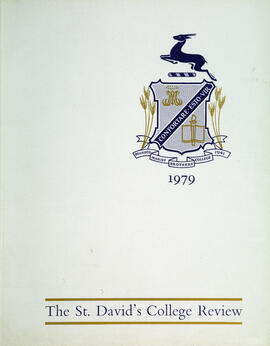
St David's Marist Inanda Yearbook 1979
Parte de St David's Marist Inanda Yearbooks
Record of the school's activities 1979
St David's Marist Inanda
St David's Marist Inanda Yearbook 1980
Parte de St David's Marist Inanda Yearbooks
Record of the school's activities 1980
St David's Marist Inanda
St David's Marist Inanda Yearbook 1982
Parte de St David's Marist Inanda Yearbooks
Record of the school's activities 1982
St David's Marist Inanda
St David's Marist Inanda Yearbook 1982
Parte de St David's Marist Inanda Yearbooks
St David's Marist Inanda Yearbook 1987
Parte de St David's Marist Inanda Yearbooks
Record of the school's activities 1987
St David's Marist Inanda
St David's Marist Inanda Yearbook 1989
Parte de St David's Marist Inanda Yearbooks
St David's Marist Inanda Yearbook 1990
Parte de St David's Marist Inanda Yearbooks
St David's Marist Inanda Yearbook 1991
Parte de St David's Marist Inanda Yearbooks
Record of the school's activities 1991
St David's Marist Inanda
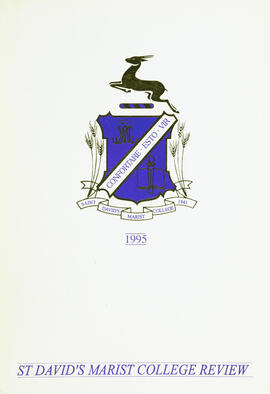
St David's Marist Inanda Yearbook 1995
Parte de St David's Marist Inanda Yearbooks
Record of the school's activities 1995
St David's Marist Inanda
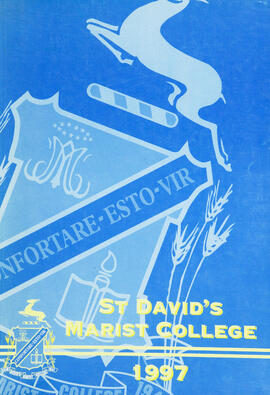
St David's Marist Inanda Yearbook 1997
Parte de St David's Marist Inanda Yearbooks
Record of the school's activities 1997
St David's Marist Inanda
1997 St David's Marist Inanda Yearbook Pages 109 - 225
Parte de St David's Marist Inanda Yearbooks
1998 St David's Marist Inanda Yearbook. Pages 1-157
Parte de St David's Marist Inanda Yearbooks
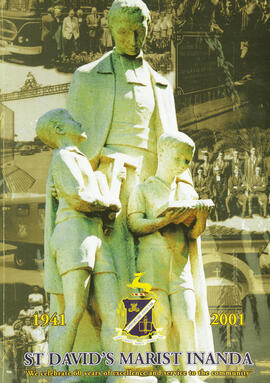
St David's Marist Inanda Yearbook 2001
Parte de St David's Marist Inanda Yearbooks
Record of the school's activities 2001
St David's Marist Inanda
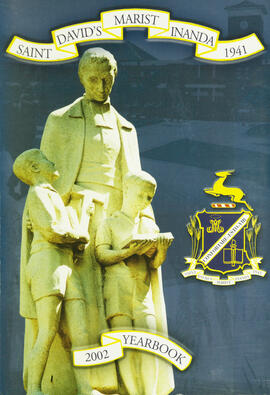
St David's Marist Inanda Yearbook 2002
Parte de St David's Marist Inanda Yearbooks
Record of the school's activities 2002
St David's Marist Inanda
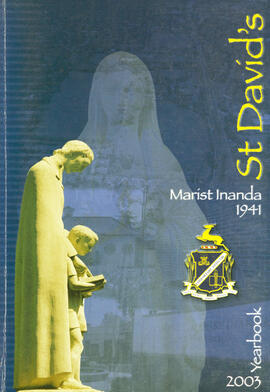
St David's Marist Inanda Yearbook 2003
Parte de St David's Marist Inanda Yearbooks
Record of the school's activities 2003
St David's Marist Inanda
2009 St David's Marist Inanda Yearbook Pages 157 - 277
Parte de St David's Marist Inanda Yearbooks
2011 St David's Marist Inanda Yearbook Pages 2 -171
Parte de St David's Marist Inanda Yearbooks
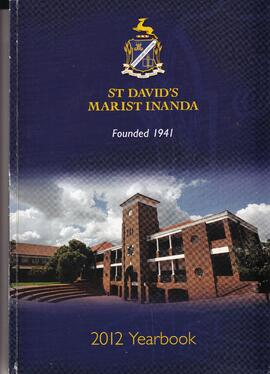
St David's Marist Inanda Yearbook 2012
Parte de St David's Marist Inanda Yearbooks
Record of the school's activities 2012
St David's Marist Inanda
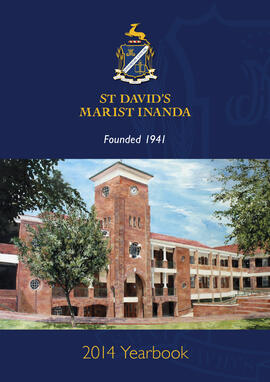
St David's Marist Inanda Yearbook 2014
Parte de St David's Marist Inanda Yearbooks
Record of the school's activities 2014
St David's Marist Inanda
2014 St David's Marist Inanda Yearbook ages 2 - 198
Parte de St David's Marist Inanda Yearbooks
2014 St David's Marist Inanda Yearbook Pages 199-380
Parte de St David's Marist Inanda Yearbooks
2016 St David's Marist Inanda Yearbook Pages 2 - 230
Parte de St David's Marist Inanda Yearbooks
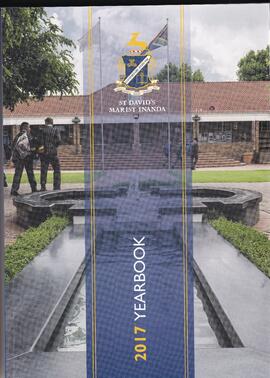
St David's Marist Inanda Yearbook 2017
Parte de St David's Marist Inanda Yearbooks
Record of the school's activities 2017
St David's Marist Inanda
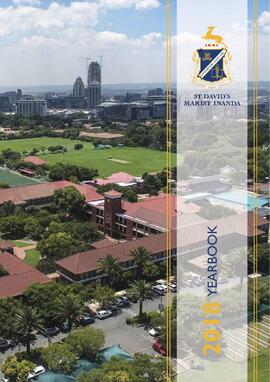
St David's Marist Inanda Yearbook 2018
Parte de St David's Marist Inanda Yearbooks
Record of the school's activities 2018
St David's Marist Inanda
2018 St David's Marist Inanda Yearbook. Part 2 Pages 179 - 360
Parte de St David's Marist Inanda Yearbooks
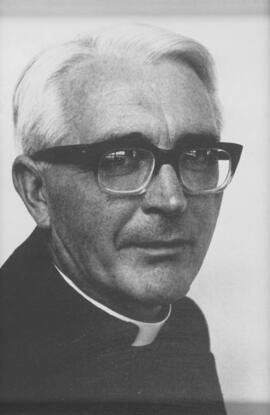
1960- 1974 Brother Anthony - Headmaster
Parte de Headmasters, Headmistresses and Principals of St David's - Photographs
Digitsed copies of official photographs of the various heads, etc. of the school
St David's Marist Inanda
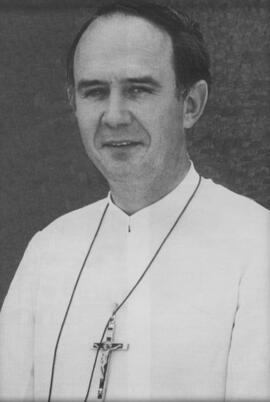
1975 - 1981 Brother Timothy - Headmaster
Parte de Headmasters, Headmistresses and Principals of St David's - Photographs
Digitsed copies of official photographs of the various heads, etc. of the school
St David's Marist Inanda
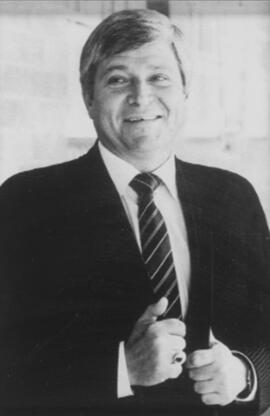
1985 - 1988 Darryl Boswell - Headmaster
Parte de Headmasters, Headmistresses and Principals of St David's - Photographs
Digitsed copies of official photographs of the various heads, etc. of the school
St David's Marist Inanda
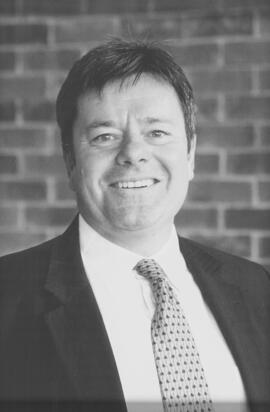
1995 -2002 Paul Edey - High School Headmaster
Parte de Headmasters, Headmistresses and Principals of St David's - Photographs
Digitsed copies of official photographs of the various heads, etc. of the school
St David's Marist Inanda
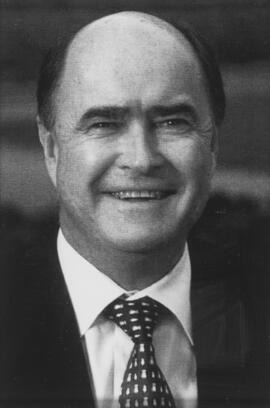
1997 -2002 Malcolm Williams - High School Deputy Headmaster
Parte de Headmasters, Headmistresses and Principals of St David's - Photographs
Digitsed copies of official photographs of the various heads, etc. of the school
St David's Marist Inanda
2002 -2006 -Paul Edey - Executive Head, Whole School
Parte de Headmasters, Headmistresses and Principals of St David's - Photographs
Digitsed copies of official photographs of the various heads, etc. of the school
St David's Marist Inanda
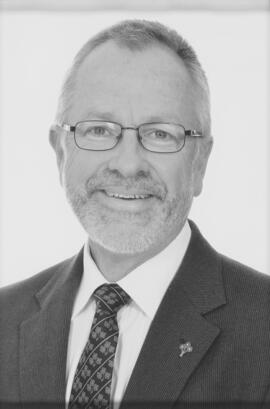
2006 - 2015 Mike Greeff - Executive Head Whole School
Parte de Headmasters, Headmistresses and Principals of St David's - Photographs
Digitsed copies of official photographs of the various heads, etc. of the school
St David's Marist Inanda
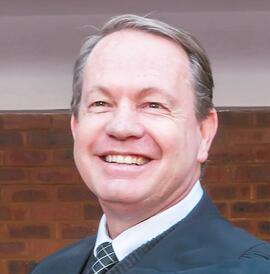
2015 - 2017 Graeme Edwards - Prep School Headmaster
Parte de Headmasters, Headmistresses and Principals of St David's - Photographs
Digitsed copies of official photographs of the various heads, etc. of the school
St David's Marist Inanda

Interview with Cecil Thokoane 1985
Interview with Cecil Thokoane – 1985
Cecil came to St David’s in June 1982 at the age of 12 into standard 7 and matriculated in 1985
age 16. Cecil was born in Soweto and went to a government school for his primary schooling. In
standard 3 his teacher thought he was too smart and he was promoted to standard 4. Cecil’s
mother wanted him to go to a Catholic school either Holy Cross or St Matthews, run by the
nuns. In May 1982 Sister Michael gave him a letter in which he was awarded a scholarship by
British Petroleum for tuition at St David’s. Fortunately his school colours were the same and he
got the rest of his school uniform from the swop shop. It was quite an experience, not knowing
who, where or what but he was made to feel welcome and at home. Even so it was quite a
transition and, since his mother had taken him to school by tram which stopped at Dunkeld he
had to find his own way home and got lost walking back. Eventually he used to ride in a Combi
with much younger boys to school but as he had to stay later for sport he had to use public
transport to get home. He used to have to get up at 5.00am and spend an hour travelling to
school and when he had sport it would take him even longer to get home.
He remembers meeting Mr Murphy and being mobbed the first lunch hour and given a crash
course in rugby. He went into Osmond house and when he finally settled in was able to excel
academically. He learnt to play rugby, becoming quite a good player making the A team. He
also performed well at athletics and collected a number of accolades including being awarded
the Sandton Mayorial Trophy two years in a row and breaking the record for the 800m.
Cecil was not a member of the swimming team and tells the story of how he nearly drowned
earning the wrath of Willy Castle. He had been at the school a couple of months, it was the
beginning of the summer/spring season and PT shifted to the swimming pool where the boys
were going to play water-polo. Being just 12 he thought he could just swim and got into the pool
at the deep end and promptly proceeded to sink. Fortunately one of his class mates, Steve the
American, spotted him and rescued him. By lunch time the whole school knew that he had
nearly drowned and he only started taking lessons two years ago in 2009 overcoming his fear.
Cecil enjoyed playing rugby and gradually improved becoming quite a good kicker. His first
rugby game was quite funny as he had literally been given a week’s classroom tutorial about the
game. He went in as a sub and when he first saw this mean faced, spitting, fuming guy from
Parktown Boys barrelling down on him and, even though it was his first game ever, he sensed
that if he were to let him go past he would score and right royally embarrass him. He caught him
with a high tackle, he didn’t score, they were penalised but didn’t lose any points. This was his
debut into 4 years of sweat, pain and fun as well.
He remembered a particular rugby game. It was during an U14 game and St David’s was trailing
9-11. He thought they had lost the game, in front of a full crowd waiting to watch the 1st team
match against Marist Observatory, the match of the season and compulsory. There were literally
a few minutes left to the last whistle and as fullback he was lounging under the poles and then
they were awarded a penalty 10 or so metres into their half. He thought that the front would run
the ball and attempt a try. Next thing he heard his name being called, the team wanted him to
kick for goal and earn 3 points. He told them it was too far and they shouted that he had made
those kind of kicks during practise. So all of a sudden everyone was looking at him, the whole
place was quiet. He went up, made a nice sand mound and started taking his back-step, only
this time he went back at least 20 metres; all the while saying his Hail Marys. He took what felt
like a long slow motion run and kicked that ball with all his might. His kick was dead straight
and, from his vantage point it looked as if the ball had fallen short. Next thing the whole stadium
erupted with jubilation. It took seconds for him to realise that he had scored the penalty from
that distance and had also won the school the game. His moment of glory! The first team went
on to win their match and on monday he had the pleasure of the whole episode being recounted
to the school at assembly.
Another game he remembered was an U14 away game at Parktown Boys, the ref was a 1st year
student from Wits and half the guys were bigger than Cecil. They had been having a bad
season so the game deteriorated pretty quickly and the ref completely lost control with full on
brawls on the field. The game was abandoned and Cecil was in a bit of a fix because he
planned to walk from Parktown Boys into town to catch his bus home. After the fight he was the
only blue and yellow rugby shirt in a sea of black and red. In the spirit of sportsmanship they
chuckled about the fights during the game as he made his way to the gate – the year of living
dangerously.
Most rugby games were a mixture of excitement and fear. There simply weren’t many black
children playing rugby and a lot of times Cecil could see the other team marking him up as he
got off the bus in all cases to try and make his game a misery. However he was lightning fast
and they couldn’t catch him most of the time and his Marist brothers and team mates were
always close by to bring woe unto whoever felt the urge to harm him outside the normal rules of
the game. Unfortunately because the riots were so bad, he stopped playing rugby in Matric and
he didn’t make the 1st team.
The teachers he remembered were Mrs Evans for making him feel welcome when he first
arrived at St David’s. Mrs Evans caused an explosion during a Chemistry class. She was
showing how sodium, he thought, reacted with water. The boys started to urge her to throw in
larger chunks and a large explosion followed which the boys thought was awesome but left Mrs
Evans very red-faced.
Mr Boswell understood where he came from and found a family, the Hoffmeyers for him to stay
with during the Matric exams literally saving his life as the Combi he normally travelled in was
attacked and he would have been targeted. Mr Colia was always cold and hard but made him
want to really prove himself at Maths. Mr Farrel,for enabling him to enjoy History, his only
distinction in Matric and Mrs Elliot for teaching him to love Shakespeare. He shocked her by
getting a first class English pass for Matric, so much so that she wrote him a card expressing
her joy.
Cecil was awarded scrolls for History and Biology. He couldn’t participate in school plays etc
because the travelling was so difficult. He used to get nervous doing orals in front of the class
and remembers talking about his then hobby ballroom dancing which caused some hilarity. On
his last day he wrote Afrikaans and stayed with the Hoffmeyers going home the following
weekend. He was sad to leave St David’s where he had grown up intellectually and as a person.
He had an awesome time and came into an environment where he became good at sport and
was given the opportunity to reach new heights.
After school Cecil went to Wits to study mining engineering which was a disaster as he realised
he was not mechanically inclined. He then went to the University of the Western Cape where he
studied for a BSc majoring in Maths and Physics and his minors were in Computer Science and
Applied Maths with dreams of working as a nuclear physicist. Later he also completed an MBL
through Unisa. Although he was sponsored by BP he was recruited by Engen when his career
in IT began. He also worked for the stock exchange, IBM and a start up company for 3 years
which failed. He then went on to Dimension Data and worked with Jason Goodall, an Old Boy of
the same year, as chief technical officer for Middle and East Africa. Jason is currently the MD of
Dimension Data. Cecil is now running his own company; Galeboe Professional Services which
has grown 300 – 400%.He is a finalist in the Finance Week competition for entrepreneurs.
Cecil is also vice-chairperson of the Unisa Alumni Committee and a non-executive director of
the Unisa School of Business Leadership. He has three daughters Jade 13, Tyler 11 and Eisha
6 all pupils at St Teresa’s where his wife went to school.
He is a member of MOBS and is in touch with a number of old boys such as Jason Goodall,
Branden Aab, Solly Maponya, Walter Cronje, Jeremy Franklin, Eugene Taylor, Paul Johnston
and Rees Carr.
JLE June 2012
Egenrieder, Julie
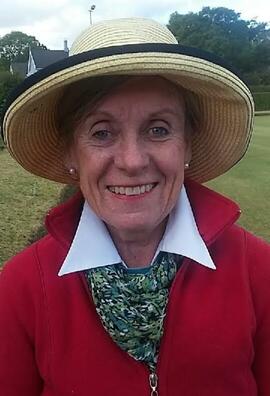
Interview with Clare Hedding 1996 - 2014 Staff
Interview with Clare Hedding Staff – 1996
Clare started teaching at St David’s in the middle of the first term in 1996 when she took over
Glenda Burn’s class whilst she travelled to New Zealand.
Apart from the usual curriculum, Clare also taught Religious Instruction throughout the term
which was new as no-one had been teaching the subject at the time. After being at the school
for only two weeks, and having been approached by parents who were unhappy about their
children not being taught RI, Clare attended an executive meeting and presented her point of
view.
The following term, Rick Wilson phoned her as Yvonne Sandie the grade 4 teacher had had a
stroke following an attack on her son. Clare ended up teaching until the end of that year but, as
her children were still quite small she normally preferred to do relief teaching.
Mitzi Claasen, together with Sandra Tarlie, was the remedial teachers and Mitzi asked if Clare
would join the remedial team teaching remedial Maths. She remembers teaching in what is now
Magda Ceruti’s office for 4 years, mornings only.
During this time she had thought that maybe her son James could attend the school but was
rebuffed rather rudely by the then prep headmaster’s secretary.
Willy Castle then approached her and asked if she could supervise the retreats for each class,
holding them in the brother’s chapel. Then Marilyn Middlewick the Music teacher resigned, she
also taught Religion to grade 7 and Clare was asked if she would cover that too. Shortly
afterwards Father Brewer was diagnosed with cancer and struggled to say Mass. Clare then
assisted him in distributing the communion. Father Brewer subsequently retired in 1998 and
died in June1999.
Once again Rick Wilson called her in and asked if she would consider becoming the RE coordinator
when, at the time she was not even a member of staff! Darryl Webb joined St David’s
and, together with Glenda Anderson wanted to start a bridging class. Clare then started a grade
3 and 4 bridging class and went to have a look at the way the Ridge school organised theirs.
The classes began in 2002 and two years later reverted to grade 2 and 3. Clare was also
teaching RE to grade 7 and was running the chapel. Cindy Cronje eventually joined the staff,
teaching the grade 2 bridging class followed by Helen Mills.
In 2004 Clare had a break from St David’s and went to Grahamstown to support her son whilst
he was studying for Matric. She returned to St David’s again the following year and retired at the
end of 2011, her position being taken by Libby Hill. However Clare was not allowed to languish
long as a retiree and Rick called her the following year, 2012 and asked if she could possibly
teach Afrikaans to the grade 4 and 6 classes. She found this hard in the beginning but now
loves every minute of it.
The amazing thing about Clare’s career at St David’s is that she didn’t actually ever apply for
any post but was always asked to step into the breach and she felt that God just wanted her to
be there.
Clare had strong links with St David’s as a child. Her brother John was a pupil at CBC in
Kimberly 1949 -50 but was expelled and eventually became a boarder at St David’s as transport
was a problem. Clare remembers the dormitories as being huge with so many beds in them.
She also remembers an occasion when she was very young and she came to the school, John
took her to his classroom holding her hand. The brother asked her some questions and then
proceeded to pick her up and placed her on a desk, she then recited “Mary had a little lamb”,
the boys all cheered, which pleased her no end.
John was a very good sportsman, superb runner and top of his league for many years. In his
Matric year, 1954 he played the role of the admiral in the “Pirates of Penzance” and was
awarded the victor ludorum. John was very much a people person and became a prefect. His
nickname was “Doc” after his surname Livingstone.
The bell in the Chapel of Mary is there because of John. The nuns of the Carmelite Convent in
Wynberg gave him their chapel bell when the convent closed down.
Clare’s younger brother Brian, matriculated at St David’s in 1959 beginning his career there in
standard 2. In 1954 their parents went overseas for 3 months; Brian became a boarder and so
enjoyed the experience that he stayed on. Brian had a friend Derry Moore of an Irish catholic
family and Clare was introduced to Derry’s sister Coleen which was the beginning of a firm
friendship which continued until Coleen became a nun with her brother Derry taking up the
Marist Brotherhood. Derry did his training in Melbourne, Australia and taught at St Charles for
many years.
Clare’s mother was very involved with the ladies committee and organised fetes as a fund
raiser. She also supervised the matric dance and the catering. Clare remembers accompanying
her mother during school holidays and recalls that Piet the cook gave her biscuits. Her mother
was a keen gardener and used to take slips for Brother Pius and helped him to build the rockery
by reception. Clare’s father retired in his 50’s and used to “consult” with Brother Edwin regarding
maintenance and building for St David’s.
When the school needed some stalls for a fete, Clare’s father built them on the back lawn at
home and the school uses the same design to this day. Clare’s mother ran the handicraft and
needlework stall and made fairy dolls.
JE August 2012
Egenrieder, Julie
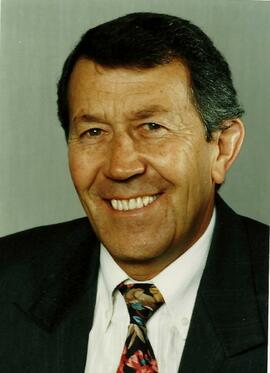
Interview with Brian Kirschman 1958
Interview with Brian Kirchmann – 1958
Brian was enrolled as a pupil at St David’s in standard 3 in 1950. Both he and his brother had
attended Craighall Primary and when his brother was due to go into the high school at St
David’s it was decided that Brian should go too. Both of them were day boys and Brian
remembers the quad and playing soccer there at break. He had played rugby at Craighall and
had to learn to play soccer on arrival at St David’s.
He recalls his mother used to pack extra sandwiches or tuck for the boarders.
His best year in primary school was standard 4 with Mrs Kempster, he got straight A’s. She was
very strict but a very good teacher and had good and bad dress days. She was followed by Mr
Bishop who was not as strong and the boys used to take advantage as he was not strict
enough. Brian’s marks went down to B’s from standard 6.
There were never more than 20 – 27 in a class and there was one class per standard. It was
tough playing rugby against bigger schools such as KES. The academic side of school took
second place to sport which Brian loved. He played cricket, rugby and participated in swimming
and athletics but not in tennis.
He enjoyed the brothers, they were committed and open to talk to the boys at any time. In
standard 8 he wanted to convert to Catholicism and then go into the brotherhood. Br Ralph
talked to him and told him to think carefully about this, he said that Catholicism was a hard and
strict discipline and to become a brother meant one had to be married to the brotherhood and to
the Catholic church. Br Ralph could see the kind of person Brian would become and Brian later
realized that Br Ralph was right.
Brian remembered Br Edwin (Jack) walked with a stoop following a back injury after a rugby
accident, other brothers were Br Gerald, Br Bonaventure and Br Anthony. They were good
guys, strict but fair and the younger brothers, who weren’t much older than the boys they taught,
used to coach rugby.
He recalled an incident when Br Edwin had previously warned the boys not to play near the
parked cars, a ball rolled under a car and Brian went to get it out from under it, the next moment
he saw a large pair of black shoes and heard Br Edwin telling him to come to his office. He got
six of the best for that However, he felt that the strictness and discipline was good and feels
sorry that his grandchildren no longer experience that kind of discipline. He feels that children
should be given boundaries.
Another time Br Bonaventure had a Science class and some of the boys had concocted an evil
smelling potion in a phial and had broken it filling the classroom with the disgusting smell. Br
Bonaventure calmly told them to close the windows, gave them work to do and went outside
and watched them suffer. The instigators had to run the gauntlet afterwards during break.
During their matric year Br Edwin insisted that the boys still play rugby and cricket after school.
He felt they should have an hour’s sport and then they could continue working, he made them
make time.
In standard 9 Brian went overseas to a scout jamboree during July, August and September
travelling there and back on the “Sterling Castle”. On his return he just managed to scrape
through the exams and because of this didn’t get a very good matric and he rewrote the
following year at Damelin.
His parents had said they would either pay for the overseas trip or for university so he didn’t go
to varsity but underwent a marketing course at the Institute of Marketing Management. He didn’t
regret the experience he had had touring the UK and France with other like minded boys but,
with hindsight he should have repeated standard 9. Overall he really enjoyed his time at St
David’s but his son wanted to go to St Stithians as he had been at Craighall primary and many
of his pals were going there. St David’s was going through a bad patch at the time which also
influenced the decision.
Work wise he started off with an auctioneering and property company with Richard Currie, he
then went on into the plastics industry becoming sales director for Omega Plastics. He was then
head-hunted by Brian Pffaf, joined Southern Sun and was their national sales manager from
1978-83. All the travelling and time away from home created a strain on his married life so he
left and joined a steel furniture manufacturing company for about 7 years. For the latter part of
his working life he was the CEO for Sapoa (South African Property Owners Association) dealing
with commercial property development for 16 years and retired in 2005. Whilst he was with
Sapoa he was responsible for setting up an education programme for the property industry.
Brian and his wife Gail are committed Christians, members of the Bryanston Methodist Church
and do some marriage counselling.
Other contemporaries: Frank Mills – member Parkview Golf Club; John Rushton living in
Pietermaritzburg.
JLE April 2012
Egenrieder, Julie
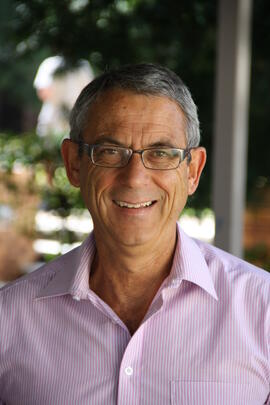
Interview with Greg Royce 1989 - 1995 Staff
Greg Royce 1989 to 1995 Greg was deputy head at St Martin’s until March 1989 before being appointed as
prep headmaster at St David’s. He and his wife Pam were very touched as staff held a welcome lunch at the
tennis courts.
Greg stated that the school was running well despite the lack of a headmaster for so many years. The only
problem he found was that each person was doing their own thing instead of sharing ideas with each other.
His first task was to formalise things and found that he got on well with the staff and that they accepted him.
He always got on very well with Willy Castle and, on one particular occasion Willy wanted a meeting with Greg.
A date and time was duly arranged but Willy didn’t pitch, Greg found out later that Willy and Carol Ansell were
having lunch together and that Willy had forgotten about the meeting!
Greg worked well with his deputy, David Spence. David had a flair for implementing Greg’s many ideas and
worked hard to implement the thinking skills and helped arrange for Dr Edward de Bono to visit St David’s.
Under Greg’s guidance St David’s became the first school to introduce Kumon in South Africa. The nursery
schools were also asked not to concentrate on table top activities but rather to concentrate on gross and fine
motor activities. Greg was also instrumental in introducing remedial therapy, occupational therapy and speech
therapy into the school. He also encouraged the reintroduction of music into the curriculum. Working with Paul
Davies proved difficult at times due to Paul being very dogmatic but on the whole they worked well together.
Paul introduced the house system and he brought more formality to proceedings. Greg felt that the prep
should be represented on the board and wrote a letter requesting prep representation. This was a slow
process and took about 2 years before Greg was allowed to attend and address prep issues.
Greg always found the parents warm and supportive but unfortunately they always compared St David’s to St
John’s or St Stithian’s. The one thing the parents didn’t take into account was that the fees were substantially
lower than these other schools so the school didn’t have the funds and thus it was difficult to compete with
them. The prep pavilion was built during Greg’s stay at St David’s. Greg had budgeted for a double garage to
be built to house equipment but once the parents saw the building in progress, they willing gave money and so
the whole project expanded and a concrete slab was laid to provide for a first floor. The school expanded into
3 streams per grade, which made St David’s more competitive and also provided more capital for projects.
As regards the board, Greg felt that Terrence Wilkinson was an excellent chairman. He brought
professionalism into the board and the school started to flourish under his guidance. The PTA also played a
huge part in school life. One major project was when they erected the roof over the stands surrounding the
pool under the chairmanship of Mike O’Shea. Greg decided to leave St David’s in March 1995 because he
was offered a very good package from St Peter’s and with a growing family this was important as was the fact
that Greg was an anglican and of course St David’s was a catholic school.
Greg has fond memories of St David’s as their third child, Liam, was born while Greg was headmaster here.
Liam enjoyed the life at school and a familiar sight was Liam being pushed around the campus in his pram.
Greg loved his time at St David’s where he worked hard and played hard! He started the potjiekos competition
which still takes place, as well as the staff christmas ‘thank you’ party. Greg enjoyed his wine but also loved
the bush and nature. He encouraged the school to plant indigenous trees and also took groups of boys on
camps into the bush. Greg loved animals and encouraged the staff to look after the birds and animals in the
birdcage in the prep playground. The guinea fowl on the property had chicks but one got isolated and was
struggling to survive so Greg put it in the birdcage for protection because he felt it would not survive outside.
He, unfortunately, had to release the bird due to huge pressure, but as suspected, the bird was killed on the
first day that it was released!
In closing Greg stated that he enjoyed his time at St David’s and has fond memories. He also enjoyed working
with the Brothers and meeting the other Marist Heads. January 2011
Anderson, Glenda
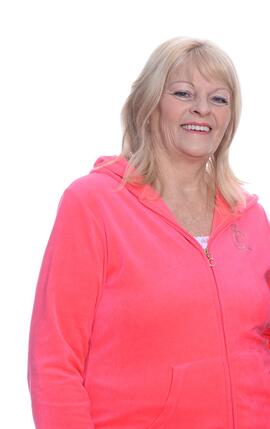
Interview with Beverly Geldenhuys
Interview - Beverly Geldenhuys – Staff
Bev is the third generation of her family to be linked to St David’s. Her grandmother, Beryl Smith
taught grade 1 at Koch Street, moving to Marion College when Koch Street closed. Bev’s
mother, Rosalyn Quillian, also worked at Marion College as a secretary. Bev started her
teaching career with two years at Marion College before joining the staff of St David’ in 1976.
She later took a break when her children were born but taught an hour a day at R20 per lesson
and came back to teaching full-time in 1984.
She views her time at St David’s as pieces of a jig-saw puzzle of stories. For example bumping
into a past pupil now aged 36, in a shopping centre and being told that Bev’s mantra, when she
taught him in standard 4, was one that he lived by; at the wedding of a past pupil when he broke
their walk up the aisle to introduce his bride to his former teacher, these are all pieces making
up the whole picture and the happiness and fulfilment she has had whilst working at St David’s.
She felt that when one followed the careers of many past pupils and knowing that one has had a
part to play it made it all so worthwhile.
She recalled that when she first joined St David’s, at first break, tea and cakes were served and
at second break, a three course meal which left everyone mellow and chilled and gave them
energy for the remainder of the day. Now she and many other members staff phone out to
Fabianos or Thrupps to get their food preferring freshly made fare to that which the school tuck
shop offers.
She enjoyed working with Paul Edey as headmaster, liked George Manolios and Greg Royce
but did not like Paul Davies. Greg Royce used to call her the R11 note – rare!
She remembers an occasion when she was part-time, substituting for a standard 2 class. The
children were being very naughty and on the second day they asked her why she didn’t throw
the blackboard duster at them as their teacher normally did! Bev had a style of teaching which
often saw her standing on a desk which usually grabbed the attention of all the pupils and
enabled them to remember the concepts being taught. She often thought that they were all
waiting with bated breath to see if she would fall, hence the concentration.
After her recent illness, many of her pupils ran up and hugged her on her return to school and
made her promise never to leave them again. In fact, the mother of one of her young pupils
insisted on being taken to visit her in hospital to make sure that she was still alive.
Both Bev’s sons went to St David’s and have retained friends from their days at school and her
grandson Riley will also follow in his father’s footsteps. Her son Gary didn’t miss one day of
school from grade 0 to matric and was presented with a special award by Paul Edey.
JE August 2011
Egenrieder, Julie
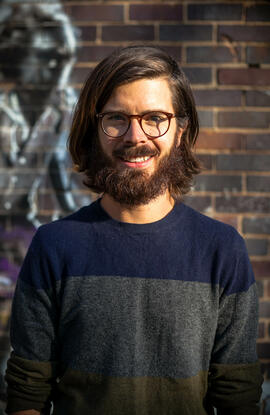
Interview with Gilbert Pooley 2001
Interview with Gilbert Pooley – 2001
Gilbert came to St David’s in standard 6 and stayed until he wrote his matric in standard 10.
This was the time when Paul Edey was headmaster. Paul had a real presence and influence in
the school and Gilbert was a big fan of his, he was a traditional, charismatic leader and put his
stamp on the school. He built a personal relationship with the boys and still taught History, his
passion was clearly teaching and education and he was an inspiring teacher. He had a way of
making a boy feel as if he were the centre of attention. Both positively and negatively he used
this technique in the classroom turning every lesson it into an engaging performance. The
school was still relatively small in 2001 with a matric group of 75 boys.
During Gilbert’s tenure the school underwent a massive transformation with the new
Champagnat hall, the high school pavilion (before this was built the boys had to change for
sport’s practice on the side of the field) and library.
On his first day he recalls lining up on the basketball courts (currently the amphitheatre) in front
of Paul Edey and head boy, Adriano Iorio, who was wearing his honours blazer, Gilbert was so
struck by Adriano in his techno-coloured formal attire that he was unsure whether Adriano was a
radical, teacher or well awarded pupil But there was no doubt that this young man in his odd
uniform was an adult, and one’s time at St David’s would change one from being the little boy
entering standard 6 (grade 8) into a man.
Gilbert played hockey and cricket and valued the enforced culture of all boys participating,
which was healthy and assisted in the development of many personal relationships.
Gilbert participated in drama performing in one-act plays as well as the school’s annual
productions. He was also very involved in debating, public speaking and chess, as the school
grew it became more competitive in those areas. He really enjoyed the cultural aspect although
it was perceived as a sideline to sport and, nerdy. There was still no high school choir or Music
department. He feels that many of those cultural activities formed him even though today he
works in business; it gave him self-confidence and the ability to present himself in a positive
light. He is very grateful for that and proud that it has developed within the school and believes
that it is a huge differentiator in later life.
The staff who made a special contribution to the cultural aspects of the school during his period
were Mr Foulds, Mrs Cameron and Ms Voorendyck (then Ms Vroom).
Opportunities to meet girls in the school environment rarely presented themselves. One such
opportunity was the first dramatic collaboration with neighbouring girls’ school Brecia House
(“The Boyfriend” in 2000 and “As You Like It” in 2001). This started the trend towards more
accessible and popular school plays, which continues today.
As at many boys’ schools he recalls the desire to meet girls was matched only by rampant
homophobia. The fact that several of his contemporaries later “came out of the closet” once they
had matriculated from St David’s is not missed.
Reverend Bruce, more than most teachers, characterised his time at St David’s, Gilbert was a
member of Bishops and the Rev was appointed his class tutor. Rev had a different philosophy
and approach. Gilbert, as all boys from his era, recalls being scolded by Rev for inappropriate
use of the word “sorry”. He brought a brand of pastoral care which was firm but comical and his
departure from the school to New Zealand was a loss.
Gilbert’s mother Bonny was involved in the tuck shop, hockey and many parent committees and
events. She was close to stalwarts such as matron, Mary Ryan, Mary von Guilleaume and
Father Michael. She taught Religious Education briefly, preparing boys for their confirmation, as
well as helping with MOBS.
There was another not so positive aspect of St David’s life at the time - the influence of a group
of boys in the 2000 matric group. They were seen as a little “Mafia”. They caused plenty of
internal trouble and had an unfortunate effect on the school’s reputation. Their little rule of terror
bred an unhealthy rivalry with other boys’ schools during this period.
Gilbert participated in the co-workers which was run by Rev Bruce and joined in the collections
for the old age home, planted a park in Soweto and was involved in civies days raising money.
This set a trend in Gilbert’s life of getting involved with social development. Whilst he was at
UCT he volunteered for SHAWCO and currently, together with Andrew Levy he runs “Umuzi
Photo Club” a youth development organisation which focuses on using the creative arts to
engage young people and to raise awareness with a goal of effecting positive change in
communities such as Diepsloot, Alexandra and Hillbrow. Umuzi pairs the young people and
media professionals with the aim of creating active compelling media for change. They will be
hosting an exhibition in Braamfontein from 29 March 2012 entitled “I am an Activist” focusing on
three communities and their problems.
Gilbert feels that the war cry reflects the sentiment of Marist Inanda –
Matrics : Kalamazumba
School: WA WA
M: Kalamazumba
S: CHA CHA
M: SEMISAKA WAKA WA
S: SEMISAKA WAKA WA
M: CHA WA
All: M.A.R.I.S.T. MARIST INANDA!
Gilbert left St David’s to study at UCT, and completed 4 years Business Science, he then went
to Trinity College, Dublin, Ireland where he completed his Masters in Economics. He joined the
Boston Consulting Group in London as a management consultant which included working for
some SA clients. He was instrumental in opening a BCG office in Johannesburg in 2011 but he
left BCG in 2011 and is now running his own company offering strategy consulting to clients in
resources (mining, oil and gas).
He sees a positive change in expectations at the school; in his time he felt less pressure to
strive for excellence and in academics, which now appears to be more important. There is more
of a performance culture at the school today.
In 2003 Gilbert had the opportunity while holidaying with his family in Rome. Gilbert had the
opportunity to attend the canonization of Marcellin Champagnat, it gave him a sense of the
international presence of Marist schools. He reflects that there appears to be no opportunities
for greater inter-action between Marist schools in South Africa.
JE February 2012
Egenrieder, Julie
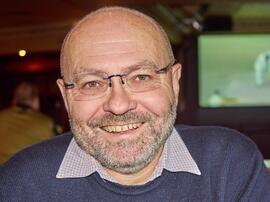
Interview with Larry Griffiths 1972
Interview with Larry Griffiths – 1972
Larry joined St David’s when he was 8 years old going into standard 2. His father was
transferred to Johannesburg from Port Elizabeth where he was formerly a pupil at St Patrick’s.
He and his younger brother Michael (1973) were day boys.
Br Anthony was the headmaster and Larry thought he was brilliant. He recalled an amusing
story involving him and Br Bosco (Mario). Br Bosco decided that Br Anthony should regain his
red hair and developed a dye which would work on his grey hair. Unfortunately it worked well,
but rather too well and Br Anthony ended up sporting fire engine red hair! This occurred shortly
before the annual prize giving and the dye didn’t wash out therefore Br Anthony had to take the
podium with his brilliant red hair much to Brother Anthony’s embarrassment and everybody
else’s amusement. In September 1979 Larry visited Br Aquinas, a family friend in the Cape and
went to see Br Anthony somewhere in the Cape Flats.
Larry did not particularly like Br Timothy, ‘Tin Man” but the boys were amused by his habit of
combing his hair over his bald patch and when the wind blew it stood straight up then flopped
onto his opposite shoulder. He enjoyed Br Bosco, he was passionate about his subject,
Science. He recalled Br Andrew giving the ’1972 matrics punishment and detention unless they
could recite the first chapter of Caesar’s Gallic Wars. He was a strong disciplinarian but always
fair. Br Aidan the bursar was popular, he was always in control and treated the boys like adults
and they responded accordingly..Larry felt that, in spite of his other problems, Br Bernard was a
good Latin teacher and managed to bring it alive with stories about its background. Father
Bailey trained him as an altar boy. Bob Blythe the Maths teacher could never get Colin
Rezekswick’s name right and called him Da Silva. Mr Zachkarowicz was fluent in English,
Polish, German, Italian and Greek, he had a rough time in Germany but managed to escape
and ended up in South Africa. He was very anti the South African government as he could see
similarities with what he had experienced in Germany. Larry felt that he was an excellent History
teacher. Mrs Janusz taught Latin, and was formidable, she was a Scot and her husband was
Polish.
Larry did well academically until Thomas Rumpelt and Alfred Ghodes came along at the start of
standard 6.They were both academically very strong and also performed well on the sports field.
However Larrry was still awarded the Costa John Memorial Trophy for coming top of the class in
standard 5. He was the first boy to be acknowledged in this way.
Larry was not a great sportsman but played 4th team rugby and, although tennis was not really
encouraged at St David’s both he and his brother played and the team achieved a place in the
premier schools league. In spite of their endeavours none of the 1972 members of the 1st tennis
team were awarded a scroll which they longed for, it was only in 1973 that tennis was
considered moderately acceptable and the school’s tennis champion, Larry’s younger brother
Michael was awarded a tennis scroll. This caused a bit of a problem in that Michael was not the
tennis captain – Michael had defeated Desmond Schatz, the tennis captain, in the final of the
school championships. The school decided to award Desmond Schatz a tennis scroll as well.
No other members of the first team were awarded scrolls.
In 1964, Larry’s first year at St David’s, it snowed and Paul Steinhardt threw a snowball with a
stone in its middle at someone; it missed and smashed the window of one of the teacher’s cars.
In December of the previous year there had been a huge hail storm which caused a lot of
damage, many windows in the school were broken including some stained glass and it took a
few years for them all to be replaced.
Larry’s first experience of being politically aware occurred in the late 1960’s when Marist old
boys, who were members of the visiting New Zealand All Blacks Rugby team came to address
the school at assembly. He remembers wondering why the Maoris could be included in the New
Zealand team and their society and the blacks in South Africa were not.
Larry remembered the victorious rugby team of ’72 and George Nichas missing a goal against
KES even though he was standing right in front of the posts. It was the only match that St
David’s lost that year.
The matric dance was held in the boarders dining room and the after party was held at Carl Ebs
parent’s home in Illovo. It was all very low key and everyone was well behaved.
Of his peers Larry noted that Terry Van Heerden – deputy head boy; Eric Melman; Steve
Goodeye, and his brother Michael (1973) class – all currently living in Australia. Carl Eb lives in
New Zealand as does David von Elling (1971) class. Patrick Esnouf (1973 class) “Mr Mining” in
South America formerly a director of Anglo and now with the Andean Board living in Chile. Tim
Cockerell’s father was a pilot who died of a heart attack and his mother brought the family to
South Africa from the UK, While having the greatest admiration for Betty Cockerell’s pluck in
moving to South Africa and bringing up three sons, all of whom attended St David’s, Larry
believes that she may have been helped by the brothers to enable her to educate her sons.
When he matriculated, Larry went to Wits University and studied Civil Engineering. Afterwards
he did two years national service becoming an officer in the South African engineering corps,
was seconded to the CSIR where he was involved with mine warfare and bridge demolition. He
was in active contact with the Rhodesian Engineers and the Selous Scouts. He then had to fulfil
conditions of his bursary and worked for Grinaker Construction for two years living in Rhodesia
before it became Zimbabwe, before returning to South Africa. He was having so much fun in
Zimbabwe that he stayed in Africa a lot longer than he had originally intended. Larry finally left
for New Zealand in February1994and was transferred to Australia in early 1995. Initially he
settled in Melbourne before moving to Queensland in early 2006. He currently lives in Brisbane
where he works as a traffic engineer in local government.
Larry thinks it is very sad the way things have evolved in South Africa. He feels very strongly
about affirmative action and its related policies, which he believes have had a very negative
effect on the development of the country and on job creation.
JLE November 2012
Egenrieder, Julie

Interview with Mike Smith 1966
Interview with Mike Smith – 1966
Mike was a day boy at St David’s and lived on a flower farm near Alexandra township. He
remembered his first day in grade 1 in the old grades block, Miss Brick was his teacher and she
used to rap the boys knuckles with her ruler. He and his brother Alf used to arrive at the school
early as their father used to drop them off on his way to market. Mike used to go and sit on the
steps and could see the traffic cops who used to come inside the school grounds to do their
speed trapping of cars on Rivonia Rd. He recalls that one morning Br Edwin the then principal
called him and sent him to tell the police that they could get some coffee from the school
kitchen. Mike was terrified of both the principal and the traffic cops so it was quite nerve
wracking for him.
Br Pius who had taught his father at Koch Street was at the school, although no longer teaching,
his passion was the gardens and he used to give the boys sweets from his lucky packet.
He remembered teachers such as Mrs Martin, Mrs Brophy, Mrs Green and Mrs Humphrey in
whose class the last minutes were dedicated to reading time. The boys really enjoyed this and
you could hear a pin drop during this time.
Mike enjoyed playing cricket from the early days when he used to play with his brother.
Throughout his school career there were always excellent cricketing coaches during the
summer months including the likes of Ken Palmer ( played for England); Jack Bannister; Don
Wilson and Poole. Mike had to choose between swimming or cricket and thoroughly enjoyed the
coaching and practise sessions. The coaches added value to their cricketing performances
which was quite good at the time. The cricket nets were next to where the new chapel now
stands.
The highlight of Mike’s school career occurred during the Michaelmass holidays, the school
then had 4 terms, which was the Marist cricket week and all the Marist schools in the country
competed against each other – St Patrick’s –Walmer; St Joseph’s – Cape Town; St Charle’s –
Pietermaritzburg; St Henry’s – Durban and St David’s – Johannesburg. The week was rotated
between the schools and Mike participated in 3 whilst in standard 8, 9 and 10. When the
matches were completed a Marist cricket 11 was selected and all the players were given a
special blazer, this was regarded as being especially prestigious. This team then played the old
boys team. Mike was selected twice for this team and became the captain in his matric year and
still has the badge given to him. During the week the food was good and the players were taken
to see a movie and a social event together with the local convent school was organised. The
Wilf Isaacs visiting cricket team was also a very special occasion and the Nuffield trials week
when St David’s and Observatory had a combined team against the likes of KES and Parktown
which gave the Marist schools a lot of credos. In those days the boys didn’t wear protective
head gear and he recalls an Obs boy, Brian Norberry being hit by a ball between the eyes. He
fortunately recovered from what was a potentially very dangerous injury.
The school’s swimming team at the time was very good and has been ever since. Athletics was
strong and regarded passionately by the boys and included such names as Terence Lavery,
Chris Terreblanche who were very talented athletes. The inter-catholic high he recalls was held
at a stadium. Rugby featured strongly and the tours were very popular. The rivalry between
Observatory and St David’s was strong and became quite hectic at times.
Academically Mike always did well being in the upper quotient of his year. He was amongst the
first boys to be streamed and studied Maths, Physics and Chemistry, Biology, English and
Afrikaans.
The school put on a couple of plays and Mike was involved backstage but did not act.
The brothers were amazing and real characters, Br Edwin, Br Anthony, Br Bosco (Mario) and Br
Andrew who was Spanish. The brothers dining room was out of bounds but, through the
occasional glimpse the boys could see that the food was good and that the brothers ate and
drank well.
Mike was caned on a daily basis, it was like an honour and not regarded as a problem. He
recalls an incident when a rather ripe orange that was thrown and just missed Br Andrew (Drac)
and all the boys were caned.
The matric dance in those days was rather different and the matric boys themselves decorated
the dining room, no huge sum of money was spent on the event and there was no before party.
The boarders were a fantastic bunch and made the school to a large extent, coming from all
over -Zambia, Zimbabwe, Mozambique the Lowveld etc. He still remains in touch with Mike
Beaumont, Bart Dorrestein, Peter Gerrard, Jannie Steyn and Eric Ambrosioni. There were many
polio victims in the school at that time and he remembers Mike Nettman who was unable to play
sport and now lives in New Zealand and was one of the “Four Jacks and a Jill” and has had a
successful career as a musician. Mike organised the 40th reunion which was held at the top of
the Michael Angelo Towers in Bart Dorrestein’s suite “The Cupola” in 2006 and with a braai on
Sunday at St David’s high school paviliion
During his matric year there was much talk about military service and Mike was called up. He
remembers lining up for the medical exam in his school uniform in the drill hall. After completing
his military service Mike went on to Wits University to study engineering and until recently ran
his own construction company. His son Robert (2004) followed in the family tradition and was a
pupil at St David’s and Mike’s father Cyprien, who is now 92 was a pupil at Koch Street and
Observatory.
JE March 2012
Egenrieder, Julie
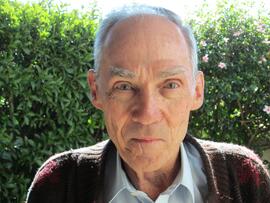
Interview with Peter Loffell 1960
Interview with Peter Loffell (1960)
Peter first attended St David’s in 1948 in grade 1 as a day boy. He was in a section in the junior
school with four classrooms with two grades within one classroom. This was separate from the
main school which had a series of classrooms in a horse shoe shape facing east, with the
dormitories facing north. The infirmary windows overlooked the swimming pool and McGill
Love’s farm. On the western side was the dining room and on the southern side, downstairs
were the headmaster’s office and about 2 classrooms. Standard 4, 5 and 6 were upstairs and
standard 7, 8, 9 and 10 downstairs. At that time the school had 300 pupils.
Peter used to go to the McGill Love’s place of 50 acres with cows etc after school until his father
came to fetch him until he was old enough to ride his bicycle to school. Mr McGill Love was
Peter’s mother’s uncle and founder of Haggy Rand and African Wire Ropes.
He remembers his first day vividly. His teacher was very strict and used the strap liberally and
Peter to this day still does not understand why she took the strap to him. Happily she didn’t stay
very long and Mrs Vincent took her place. In the first year he skipped a class and went up to
grade 2.
Other members of staff he remembers were Mrs Brophy -standard 1, standard 4 -Mrs Kempster,
standard 5 - Mr Bishop and from standard 6 upwards all the teaching was done by the brothers.
The teachers from the grades up to standard 5 had their own classrooms and taught all subjects
but after standard 6 the brothers taught individual subjects. The brothers he remembers are Br
Benedict, Br Bonaventure who was the rugby coach, Br Walker, Br Ephraim and Br Ralph.
Br Edwin was the headmaster followed by Br Benedict until Peter’s last year when Br Anthony
took his place. He recalls Br Edwin had very bad arthritis and had to take cortisone.
Peter enjoyed sport and played soccer in the junior school followed by rugby and cricket 1st and
2nds in the high school. There were A and B sides from U13, U14, U15 and then the 1st and
2nds. There was great rivalry between St David’s and Observatory who had some very good
players. The year in which he wrote matric St David’s rugby team was soundly beaten by
Observatory who had some great players and athletes in their team.
Peter remembered the tours to other Marist schools and went to Cape Town with the cricket
team in 1959 and in 1960 to St Henry’s and St Charles in Natal.
Culturally, Peter used to attend the debates between other schools but was not a member of the
debating society. A concert was held which he doesn’t remember too much about but he was
involved with two operettas, “HMS Pinafore” and “The Pirates of Penzance” directed by the
Music teacher Mr Drummond Bell.
As his first passion was the sport, Peter didn’t do too well academically and didn’t work very
hard, and although there was no sparing of the rod he wasn’t sufficiently motivated to work.
The matric dance was held in the dining room and he recalls it was agonising to find a girl to
take to the dance, he was only 16 at the time. The boys decorated the dining room themselves
and after the dance went home. In 1959 a party was organised for the end of year exams and
Br Benedict warned them that they wouldn’t be allowed to write the exams if he found them to
be involved in preparations for the party.
After he matriculated, Peter went on to Wits University where he studied for a BSc Engineering
but bombed out and then spent a year in the army after which he joined the Netherlands Bank
which became Nedbank until he retired. Paul Middlewick and Gilbert Pooley were also on the
Nedbank staff.
Peter has a son who after returning to Johannesburg from Natal went to Hyde Park High
School.
Peter attended a school reunion after 25 years and saw one of his contemporaries Clive Nobbs
who became head of Rand Mines and the Chamber of Mines.
JE March 2012
Egenrieder, Julie
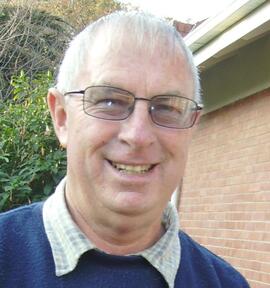
Interview with Brother Vincent 1969, 1987 - 1990
Interview with Brother Vincent – 1969 and 1987-90
Brother Vincent joined the brotherhood in 1965 at the age of 18, based at Hibberdene together with Br
Joseph who is now Brother Provincial.
His Postulancy and Novitiate years were spent close to Stellenbosch in 1967 and 1968 respectively. These
two years are set aside for his receiving the Habit and making First Vows.
In 1969 he came to St David’s and stayed there whilst undergoing a spirituality course called “Fons Vitae”
at the Good Shepherd Centre in Oaklands together with other brothers and nuns. He and Br Joseph went
daily from St David’s. At that stage Br Anthony was headmaster of the high school, V Kempster principal of
the junior school, and Willy Castle was in matric. Willy’s mother Dorothy taught Br Vincent piano. Br Vincent
taught the junior catechism to a standard 4 class. During the holidays he spent a lot of time planting grass
on the field and was involved with a lot of physical work at the school, cutting trees and grass, working
together with Aggie Simaan. He remembers the many regular teas, biscuits and chats with Aggie Simaan in
her little office near the cricket oval at the time when he helped in great measure planting the grass on the
newly-levelled oval and fields. He regularly cut the fields with the old red tractor, which is now in the preschool
playground!
His bedroom in the brothers’ House was upstairs and faced the inner quad above the then bursar’s office.
One of his duties was to ring the bell at 5am every morning to wake the brothers.
Again, whilst he was studying full-time at JCE from 1987 to 1990, he stayed at St David’s and became the
community superior. During this time became very friendly with Willem, the estate manager, whom he
frequently assisted during his holiday breaks. In his third year helped out by teaching Technical Drawing to
two grade 7 classes.
In 1991 he was the asked by the brothers to work in their mission outreach programme, and he went to
Slough in the Kalahari Desert. The St David’s Marist co-workers, run by Tom Oliver, used to come out once
a year bringing mostly clothing and blankets.
Br Vincent enjoyed his time at St David’s and still keeps in touch with many of the current and former staff
members. Past pupils and parents taught by Br Vincent in the other Marist schools and who are currently
associated with St Davids are Bruce Eyles, Franco Guiliardi, Dr Roger Gibson, Chris Elfick, Allan Young
and Marius Khoury.
Brother Vincent has been at Sacred Heart since 2007 and is currently the estates manager.
JE September 2013
Egenrieder, Julie
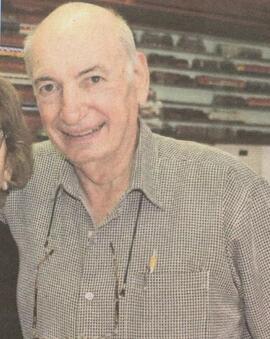
Interview with George Lagoudis 1957
Interview with George Lagoudis – 1957
George was a boarder from 1949 until 1957 and enjoyed his time at the school. His cousin Theo
Ananiades from Lorenzo Marques in Mozambique was the head of College House. The Saheti
school did not exist in those days.
Brother Edwin was the headmaster who ruled with an iron fist and was extremely conservative.
He was appointed Brother Provincial in 1957 and Br Benedict succeeded him as headmaster.
Br Benedict was a good man, housemaster for the A & B dormitories, he coached rugby and
was involved with sport at the school. Br Benedict had a more reasonable and modern
approach which was not understood by the boys and often abused.
The Brothers were clever teachers such as Br Ephraim who understood a lot of things and
taught Maths, Science and Latin and caned a whole class on one occasion.Br Bonaventure
taught Latin at matric level, Br Bartholemew taught Geography using humour to make his
lessons more interesting, he later became the principal of Koch Street. Br Lawrence was a nice
man who spoke a little Greek. Br Ralph, a big man helped with sport and specifically 1st team
rugby and showed the boys a lot of techniques. Br Gerald was in charge of the dormitories. Br
Charles Andrew Cowen was from America, presented himself to Br Edwin in his Saturday
clothes and was sternly reprimanded and told to don his cassock immediately. He had an
America approach to education which was at odds with the blinkered, regimental South African
model. Mrs Kempster in the prep was very strict but always had the best results at the end of
the year. It was nothing for her to strap the whole class 2 or 3 times a day – 10 and 11 year old
boys don’t concentrate well for too long.
Br Anthony got his nickname “Oanges” when George was sitting outside the dining room one
day playing with oranges. Br Anthony commented on this, hence the nickname.
George recalled that in his time there were about 70 boys to a class housed in the old study
beneath the old Chapel. Students always rebelled against the teachers and there was an
incident when one of the boys got hold of a cassock and bib and displayed it high up near the
water tower.
George was a thin, sinewy little boy and there was a big chap who bullied him until, one day he
came out of the dining room and in response to some comment, George swung around and
gave him a crack on his jaw and both of them ended up with bloody noses but the bullying
stopped. It was a difficult time for George because of the timing of the Cypriot campaign and he
was often singled out being the only Greek, with is nickname being “Greekie”. Because of this
he and Buchman, a German who was also bullied became friends. Other friends were Anton
Zunkel (North Transvaal) and Brian Jeffries (Durban).
There wasn’t much in the way of cultural activities but Mr Drummond-Bell did organize the boys
to sing the “Ave Maria” at the city hall. There was also a production of the “Pirates of Penzance”
but George’s voice had broken by this time. George remembers one debate against Obs where
the topic of whether the radio was needed or not was discussed. There was also the occasional
debate against Parktown Girls at their school.
On a Sunday, the non-catholic boys used to walk to the Church of England church, St Martin’s
in the Fields escorted by Father Bannon in his car. The boarders used to get one weekend off at
month end and visiting Sunday was every other Sunday of the month from 2pm until 6pm. The
food wasn’t bad but there was a lot of competition for the day boys’ sandwiches.
The boarders had lockers, George’s was number 807. The locker rooms were next to each
dorm which had 44 beds in each with a sleeping area, washrooms and the area where the
Brothers slept. In the middle were the racks for towels and gowns. One day after tea he
changed to go to the rugby field and a boy threw an orange which splattered all over George’s
locker and took Br Bartholemew’s glasses off.
The boys also stored their tuck in their lockers, which were not locked. Brian Jeffries used to
raid George’s locker and George responded by placing brooklax which looked like smarties into
a smarties box. As a result Brian subsequently spent a lot of time in the toilet and thereafter no
longer raided George’s tuck!
George was a good athlete involved with long distance running and together with Brian Jeffries,
head boy, was awarded the victor ludorum . He also played rugby 3rds, did a little swimming
and played tennis. He recalled the cinder track where the prep playing fields now stand. The
track was used by the university and for school events. The school competed against Germiston
and Springs Boy’s High Schools both home and away.
There was no official matric dance in 1957 due to a misunderstanding between the boys and
the Brothers, however the boys saved the money themselves and had an evening dinner and
dance at a night club in Eloff Street instead.
There was an annual dance in June/July when the rubber floor in the boarders dining room was
used to facilitate the dancing. The Arthur Murray dance school taught the boys to dance.
A lot of emphasis was placed on sport and as a consequence, academic s suffered and George
had to repeat his matric at Damelin, a cram college. There were 30 -32 boys in his matric class.
On finishing his education, initially George worked behind the counter of Portas delicatessen
and found working with the public quite an education in itself. He worked as a representative for
Vaal Tobacco selling cigarettes and went into the air force, working during the day then putting
in his hours at Dunnotar air force base training school. Unfortunately he didn’t pass the exams
but then did a course in engineering drawing and spent several years as an engineering
draughtsman for EBS Metal which was the first company to produce lathes and small presses in
SA during the years of sanctions. Later he was offered a job with the Travena Group managing
a store in Springs and eventually bought his father’s business in 1970. His delicatessen Portas
– The Shunting Yard is now located in Sunninghil and he also sells model trains through a
German dealership.
George last visited St David’s about 30 years ago and his grandchildren attend the Saheti,
Greek school.
JLE February 2013
Egenrieder, Julie
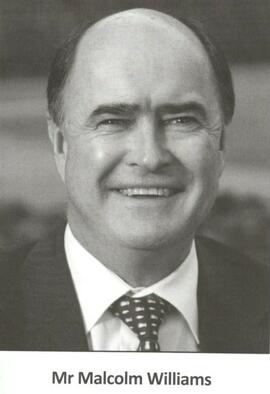
Interview with Malcolm Williams 1997 - 2013 Staff
Interview with Malcolm Williams – Staff 1997 – 2013
Malcolm joined the staff of St David’s as deputy headmaster in July 1997 whilst Paul Edey, the headmaster
was on a pilgrimage. Malcolm came from Sandown High School where he was deputy headmaster having
also taught at King Edward VII High School for a number of years. Malcolm was St David’s 12th
headmaster and the second longest serving head after Br Anthony.
When Malcolm arrived, the sense of family and positive rapport between pupils and staff was very evident.
There was a strong focus on ethos and values which permeated the school. However the school had none
of the buildings it enjoys today. There was no hall, no pavilion, no media Centre, no astro and no Br
Anthony wing. The construction of the hall and 6 classrooms began in 1998. In 1997 there were 350 pupils
enrolled in the high school and in 2103, 563. The past four years has seen increased enrolment every year
averaging 28 pupils per class. St David’s has become the school of choice in Johannesburg with 90% of
the pupils coming through from the prep school. The school is also known as one of the top academic
schools in the country and has been acknowledged as one of the main feeder schools to Wits University by
vice chancellor, Adam Habib.
In 2002 Malcolm was appointed headmaster and was determined to change the profile of the school with
pupil leadership, celebrating individual talents, creating strength in academics, sport and cultural activities.
He did this moving the school forward in all areas with the firm resolve to achieve excellence without
compromising the core values and Marist ethos of the school.
Both Paul Edey, in his new role of executive head and Malcolm were involved with professional bodies
serving in various roles on ISASA , SAHISA and CASPAat provincial and national levels . Mike Greeff
continues the school’s involvement in Catholic schools’ organisations, MSC etc.
Malcolm is a keen sportsman and hockey player and did much to encourage development of the sport at St
David’s serving as coach and convener and member of the Executive of USSASA boy’s hockey. In fact, in
2001 St David’s hockey moved into section A of Aitken Trophy with the school now one of the strongest
nationally in this area. In 2003 St David’s rugby team beat KES and 1st cricket won the Johnny Waite
Knockout.
There has been tremendous growth in Music and Drama from almost nothing to the vibrant parts of the
school they now are, as well as being academic subjects, to add to the successes in debating and public
speaking. Academic records and excellence were sustained having pupils in the top 50 candidates for
matric since being incorporated into the IEB.
Key aspects Malcolm enjoyed seeing become part of the school include: the Marist principle of ‘Presence’,
with boys and staff supported in all areas of school life; Academic excellence, which has been sustained
over time and is measured by a range of outside benchmarks including the IEB examinations; the range of
academic enrichment initiatives being undertaken, including participation in IEB pilot projects; the growth
and development of a professional staff of high quality; a sports programme which enables the school and
the boys to achieve success at provincial and national level, and also provides opportunities for all; a highperforming,
broad-based, dynamic, and diverse cultural programme; increased pupil leadership
opportunities and mechanisms for recognition, particularly in the matric leadership group; structures
established to increase the level of involvement in outreach and partnership activities; the continued
strength of the Staff Sponsorship Fund; the expansion of the school’s pastoral care structures and the
house system; the excellent facilities, the most recent and visible of these being the Brother Anthony Wing;
the ‘Whole School Day’ programme; the effective partnerships with a number of non-government
organisations and the St David’s Foundation.
Malcolm thoroughly enjoyed his years at St David’s Marist Inanda but it was not a simple matter to leave
such a fine school,with its special Marist ethos. He was enriched by working with a talented, loyal and
energised staff who give everything for the benefit of the boys in their care, for each other, and for the
school. Many of them are good friends as well as colleagues. Malcolm enjoyed developing a strong rapport
with parents over the years, who so often go the extra mile for the school. The boys themselves always
inspired him with their huge commitment, their passion for their school and their tremendous sense of
camaraderie, which is something special.
Malcolm said it had been a privilege to be part of the growth of the high school, and the many innovations
which have been evident in this growth. St David’s truly offers a holistic education where every boy is able
to develop his talents. The school now has a strong national footprint across all areas of school life and the
boys and staffs are achieving much success.
Malcolm also believed that a measure of a school is how its pupils progress once they leave school. A most
pleasing aspect being the continued success of St David’s old boys at tertiary level and beyond. They have
excelled, and the old boys are clearly able to hold their own in their chosen spheres of life. Malcolm also
found it most gratifying in recent years to see the growth and energy present in the old boys’ association,
as well as the number of old boys who have joined the teaching profession over the past thirteen years.
Malcom firmly believed that the infrastructure at St David’s is well established and has an extremely
strong, professional and committed academic, administrative and support staff which he enjoyed being part
of and had no doubt that the school would continue to go from strength to strength in the years ahead.
JLE December 2013
Egenrieder, Julie